Group 7 Halogens – Notes + Past Paper Questions: The Ultimate A* Guide for Cambridge Chemistry
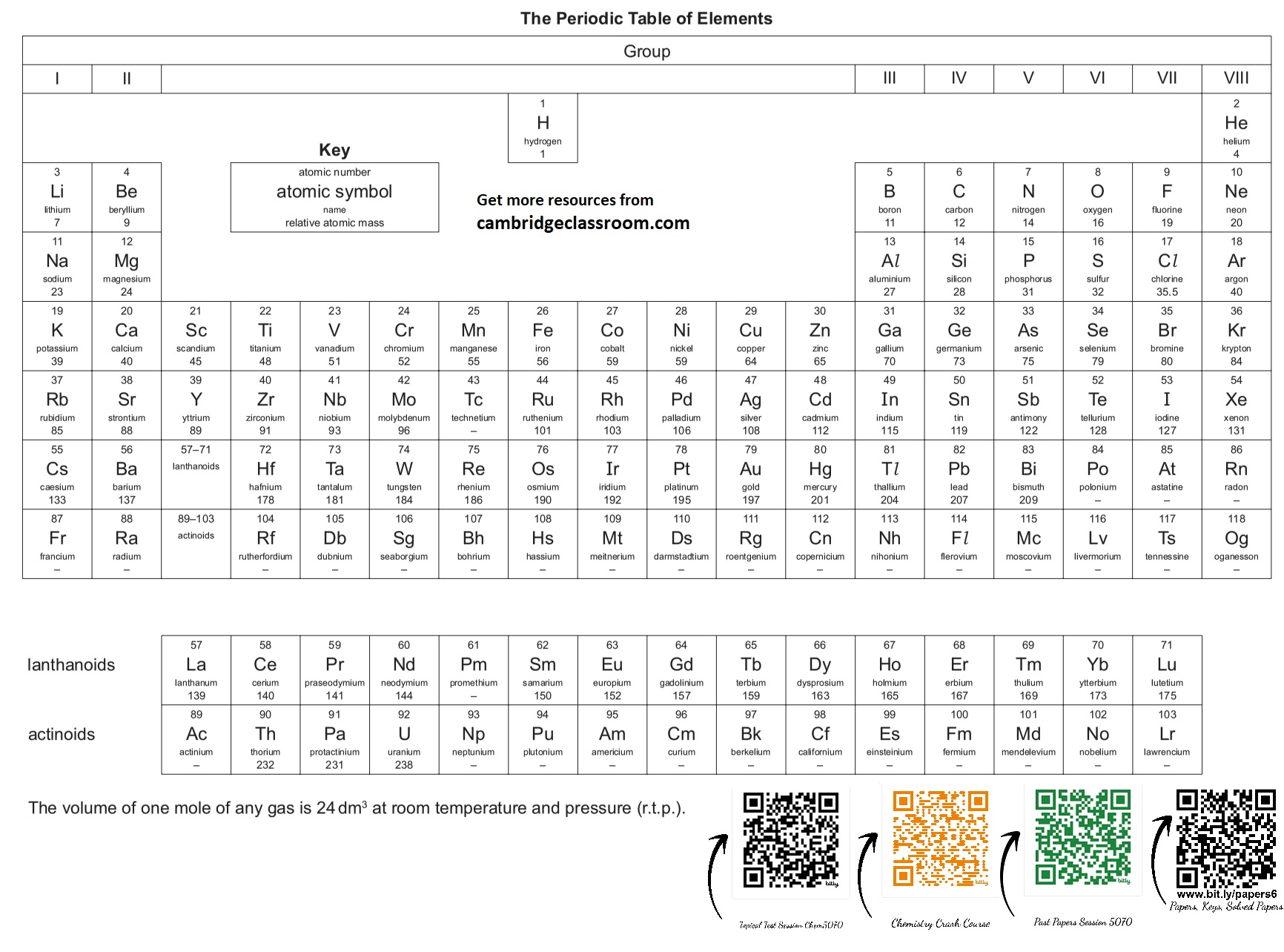
Master the volatile, highly **reactive** **group 7 halogens** (F, Cl, Br, I) to secure top marks in your **IGCSE Chemistry (0620)** and **O Level Chemistry (5070)** exams using the official **cambridge periodic table** data.
A*-Grade Internal Study Hub (Maximize Your Links!):
Periodic Table Chapter (Pillars → Chapters) | Halogens Ultra Premium Notes (Syllabus → Notes) | Halogen Displacement & Redox Module (Notes → Crash Course) | Formula Application in Crash Course (Formula sheet → Crash Course) | Past Paper Solved Halogen Notes (Past papers → Notes) | A-Grade Halogens Strategy (Tips pages → Crash Course)1. Defining Group 7: The Halogens (Exam-Centred Definitions)
The **Group 7** elements are known as the **Halogens** (Fluorine, Chlorine, Bromine, Iodine, and Astatine). They are all **non-metals** and **why are group 7 called halogens**? The name 'halogen' comes from the Greek word meaning 'salt-former', as they readily react with metals to form salts.
Halogens (Concise Definition)
The **group 7 halogens** are highly **reactive non-metals** characterised by having **seven valence electrons** in their outermost shell. To achieve a stable noble gas configuration, they easily **gain one electron** to form an anion with a charge of **-1** (e.g., $Cl^-$). This makes them powerful **oxidising agents**.
Key Note: All **group 7 halogens normally exist as** diatomic molecules ($X_2$), such as $Cl_2$, $Br_2$, and $I_2$.
2. Physical Properties and Trends in Group 7
Understanding the observable **physical properties of group 7 halogens** and the **trends in group 7 halogens** is essential for answering descriptive questions.
Physical State and Colour at Room Temperature
- **Chlorine ($Cl_2$):** Pale green gas.
- **Bromine ($Br_2$):** Reddish-brown volatile liquid.
- **Iodine ($I_2$):** Shiny purple-black solid that sublimes to form a purple vapour.
Boiling Point and Melting Point Trend
The **boiling point of group 7 halogens** and melting point **increase** down the group (from Fluorine to Iodine).
Reason: As you go down the group, the molecules ($X_2$) get larger, increasing the strength of the intermolecular forces (van der Waals forces). More energy is required to overcome these stronger forces, hence the higher melting and boiling points.
Locate Group 7 on the Periodic Table Easily
3. Chemical Reactivity and Displacement Reactions
The reactivity trend is the most frequently tested concept for **Group 7**.
Reactivity Trend (The Inverse Rule)
The reactivity of **group 7 halogens** **decreases** as you move down the group (from Fluorine to Iodine).
Reason: Reactivity depends on the ability to **gain one electron**. Moving down the group, the atomic size increases and the valence shell is further from the nucleus. This reduces the attraction of the nucleus for an incoming electron, making it harder to gain one. Therefore, the top halogens (like Chlorine) are more reactive than the lower halogens (like Iodine).
The Crucial Displacement Reaction
A more reactive halogen will displace a less reactive halogen from a solution of its salt. This is a classic **redox** reaction where the more reactive halogen acts as the oxidising agent.
[Image of a halogen displacement reaction]
- **Example:** Chlorine is more reactive than Bromine.
$$Cl_2(aq) + 2KBr(aq) \rightarrow 2KCl(aq) + Br_2(aq)$$ - **Observation:** Colourless $KBr$ solution turns orange/brown due to the formation of elemental $Br_2$.
This explains **which group 7 element will displace all other halogens**: **Fluorine** (F), as it is the most reactive.
4. Past Paper Questions & Exam Technique
Success in **Cambridge Chemistry** hinges on applying these notes to real **past paper questions** (PQs). Here are solved examples that frequently test **Group 7** topics:
IGCSE 0620 Paper 6 (Practical) Solved
Focus on the observation and conclusion section for Halogen tests.
O Level 5070 Paper 4 (Theory) Solved
Review the section covering periodic table trends and properties.
- **T-60 Days (Notes):** Memorise the colour and state of $Cl_2$, $Br_2$, and $I_2$. Use the Definitive Notes.
- **T-30 Days (Trends):** Understand the **decrease** in reactivity reason (less nuclear attraction for electron).
- **T-15 Days (Past Papers):** Practice writing the displacement reaction equations and predicting observations.
- **T-7 Days (Tips):** Review the **Halide Ion Test** (using aqueous Silver Nitrate) and its precipitates. Check the A-Grade Action Plan.
Group 7 Revision Timeline for A* Success
5. Teacher Profile, Demo, and Crash Course Details
🧑🏫 Teacher Profile: Prof. Faisal Janjowa (The Chemistry Guru)
Prof. Faisal Janjowa's Chemistry Crash Course is specifically designed to eliminate confusion on groups like the **Halogens**. His methodology cuts through verbose textbooks, providing you with only the **exam-centered definitions** and application skills required to ace the **periodic table of elements cambridge igcse** questions.
Demo Video: Chemistry Crash Course Ad
Crucial Study Resource: Cations and Anions Cheat Sheet (Halogens!)
👉 **Live Class Details:** Our next **Live Class** focuses on **Halide Ion Identification** and **Qualitative Analysis**, where Group 7 anions ($Cl^-$, $Br^-$, $I^-$) are key. Be prepared with your Crash Course access!